Inland Northwest Pest Guide · Post Falls, ID

Intruest Pest Management — Common Pests in the Inland Northwest: Identification & Solutions

The Inland Northwest's mix of forested mountains, river valleys, and four true seasons creates ideal conditions for a wide range of household pests. This guide helps homeowners in North Idaho, Spokane, and surrounding areas identify what they're dealing with — and what to do about it.

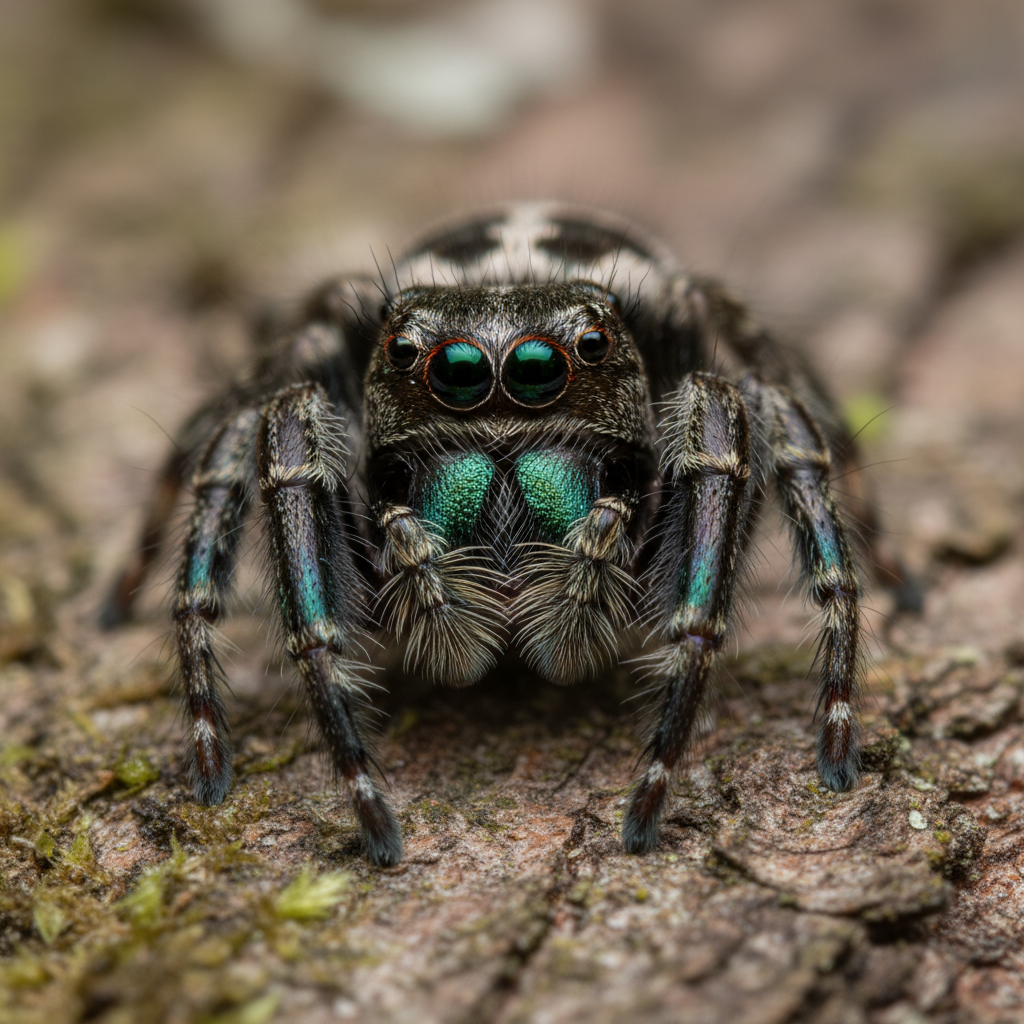
Bold jumping spider close-up on tree bark in Spokane WA Inland Northwest

Spiders of the Inland Northwest

How to Spot Them

  • Bold Jumping Spiders are compact, fuzzy, and black with white spots — often seen on sunny exterior walls and fences during the day.
  • Hobo Spiders are brown with a herringbone pattern on their abdomen and build funnel-shaped webs close to the ground.
  • Giant House Spiders look intimidating but are actually fast-moving, long-legged, and prefer damp basements and crawlspaces.
  • Black Widows are glossy black with a distinctive red hourglass shape on their underside — found in woodpiles, sheds, and dark corners.

What You Need to Know

Most spiders you encounter around your home are nuisance pests — they don't damage your structure and actually prey on other insects. The exception is the Black Widow, which carries venom that can cause serious symptoms and warrants immediate professional attention. If you're seeing large numbers of spiders indoors, it's often a sign of an underlying insect problem drawing them in.

💡 Simple Prevention Tip: Seal gaps around doors, windows, and utility penetrations. Keep woodpiles stored away from the house and shake out shoes and gloves left in the garage before putting them on.
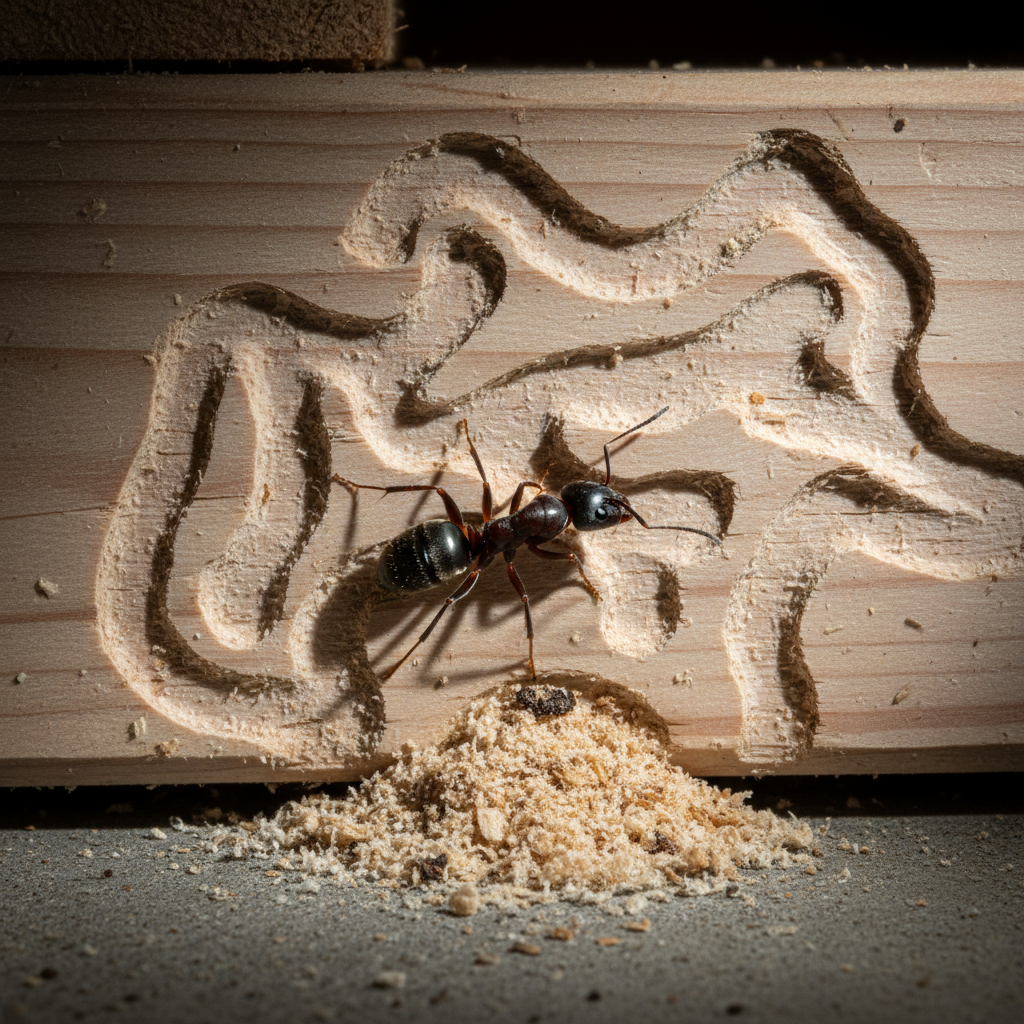
Carpenter ant damage on wood beam in North Idaho home crawlspace pest identification

Ants: Carpenter Ants vs. Pavement Ants

How to Spot Them

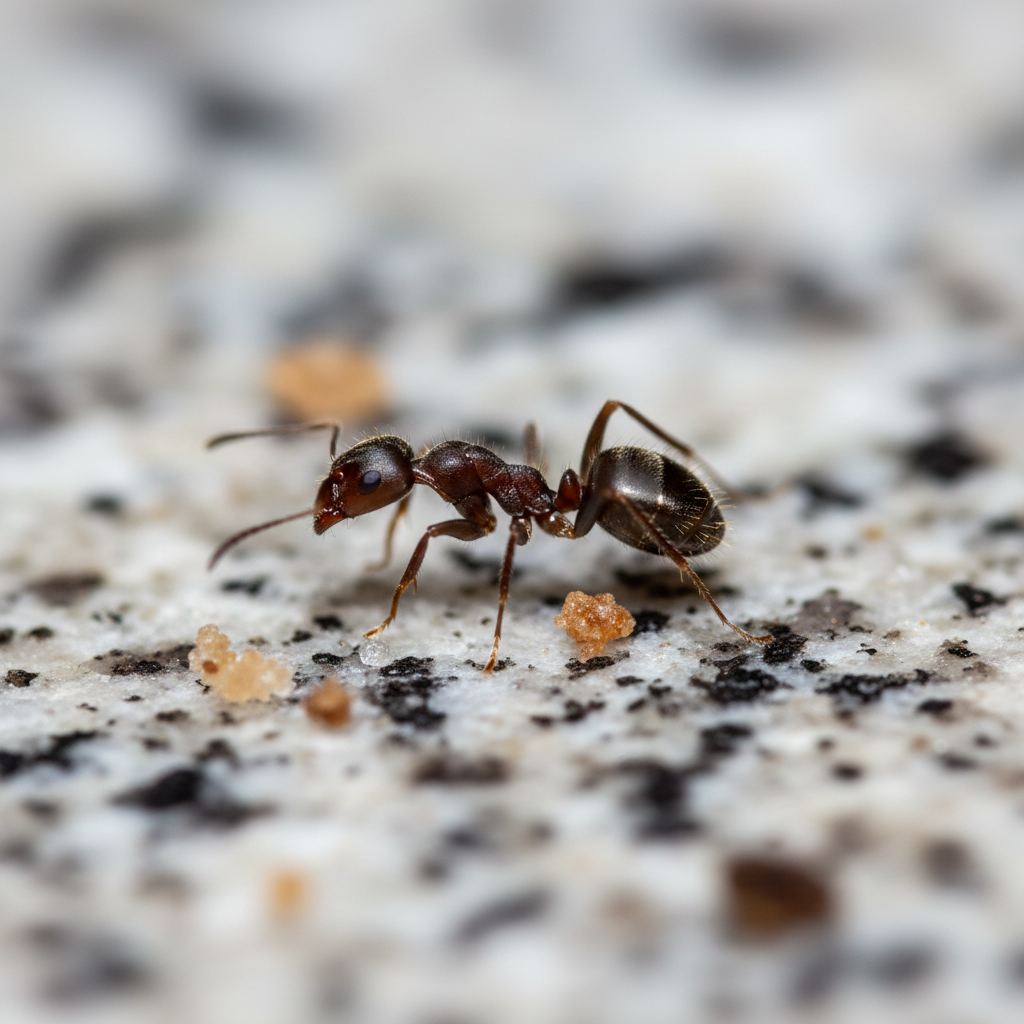
  • Carpenter Ants are large (up to ½ inch), typically black or black-and-red, and are most often spotted near moisture-damaged wood, decks, and roof eaves.
  • Look for 'frass' — a sawdust-like material pushed out of wood — as a strong sign of carpenter ant activity inside walls or beams.
  • Pavement Ants are tiny (about 1/16 inch), dark brown, and almost always found trailing along cracks in driveways, sidewalks, and slab foundations.
  • Ant swarmers (winged reproductives) appear in spring and are often the first sign homeowners notice of a well-established colony.

What You Need to Know

Pavement ants are a nuisance — annoying in the kitchen but not a structural threat. Carpenter ants, however, are a different story. They excavate galleries inside wood to nest, and over time this can cause real structural damage — especially in moisture-compromised framing, subfloors, or decks. If you spot carpenter ants regularly inside your home, it's worth having a professional inspect for moisture issues and active nesting.

💡 Simple Prevention Tip: Fix any leaky pipes, gutters, or roof flashing — carpenter ants are drawn directly to wet wood. Keep firewood stacked off the ground and well away from the foundation.
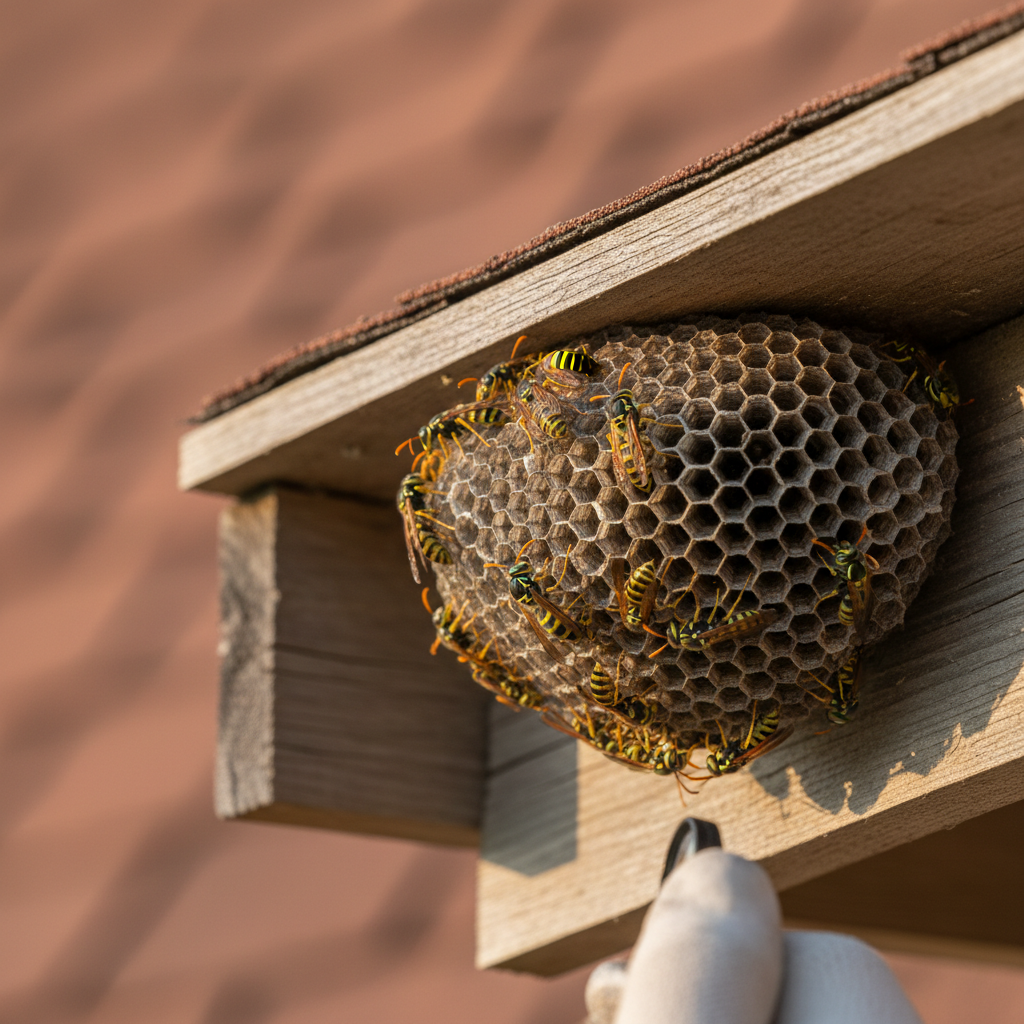
Yellowjacket wasp nest on roof eave Spokane WA Inland Northwest removal

Stinging Insects: Wasps & Yellowjackets

How to Spot Them

  • Yellowjackets are bright yellow and black, slim-waisted, and extremely aggressive — especially in late summer when colonies are at peak population.
  • Paper wasps build open, umbrella-shaped nests often found under eaves, on porch ceilings, and in attic vents.
  • Mud Daubers create distinctive tube-shaped mud nests on walls and are largely solitary and non-aggressive.
  • Bald-Faced Hornets build large, grey, football-shaped paper nests — usually in trees or bushes — and will aggressively defend them.

What You Need to Know

Wasps and yellowjackets are a genuine health hazard for people with allergies, and even those without can be seriously harmed by a swarm. Colonies grow all summer and peak in August–September, when food sources dwindle and yellowjackets become especially defensive and prone to stinging. Never attempt to remove an active nest yourself — this is exactly the situation where professional treatment pays off.

💡 Simple Prevention Tip: Check eaves, soffits, and attic vents in early spring before colonies grow. Keep outdoor trash cans sealed tightly — exposed sugary food and meat scraps are the #1 yellowjacket attractant.
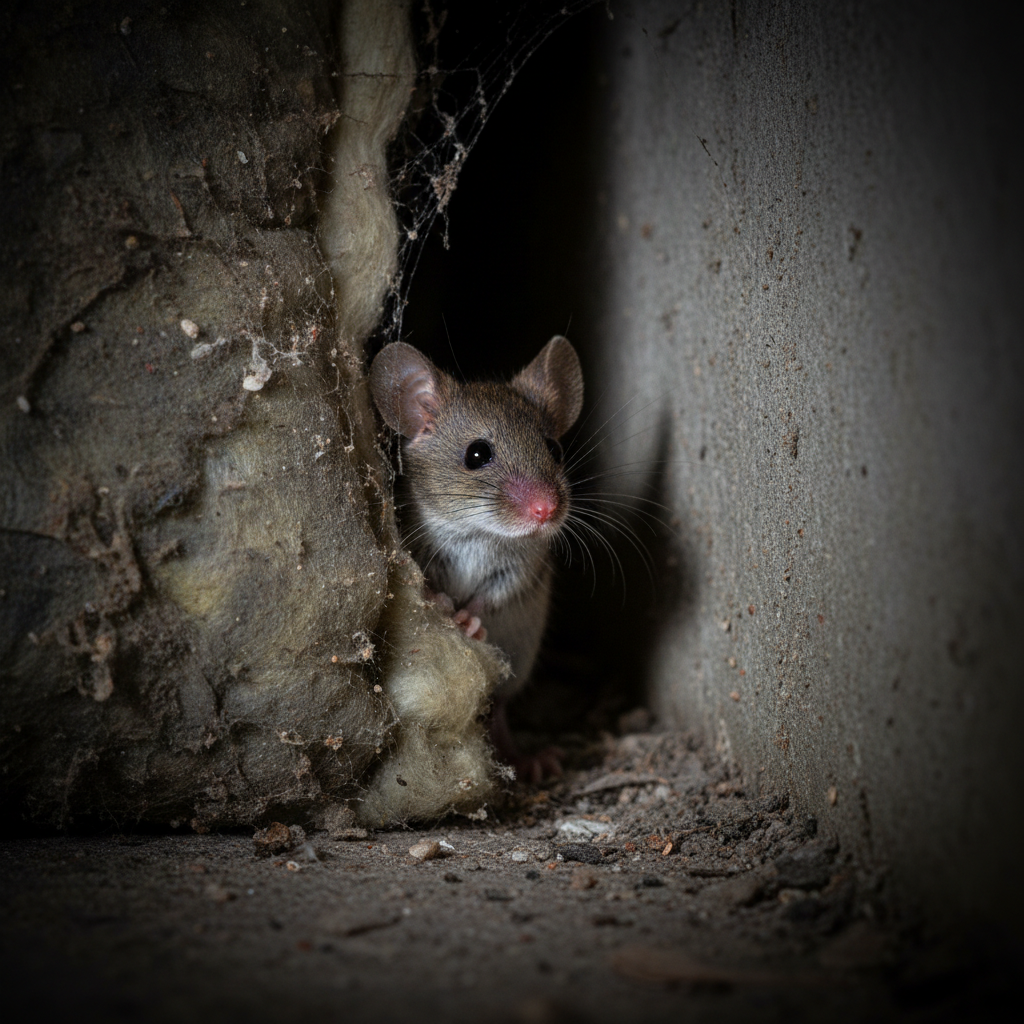
House mouse in crawlspace North Idaho rodent control Post Falls Coeur d'Alene

Rodents: Mice & Rats in the Inland Northwest

How to Spot Them

  • House Mice are small (2–3 inches), grey-brown with large ears and a thin tail — dropping look like dark rice grains and are a telltale sign.
  • Deer Mice are slightly larger, brown on top with a white belly, and are common in rural and semi-rural Inland Northwest properties.
  • Norway Rats are stocky and much larger, with blunt snouts and short ears — they burrow along foundations and under structures.
  • Look for gnaw marks on food packaging, insulation, and wiring — rodents constantly gnaw to keep their incisor teeth from overgrowing.

What You Need to Know

Rodents are both a health hazard and a structural concern. They chew through electrical wiring (a fire risk), contaminate food and surfaces with droppings and urine, and can carry diseases including Hantavirus — which is particularly associated with Deer Mice prevalent in our region. A single pair of mice can produce up to 60 offspring in one year, so early action is critical. Don't wait until the problem is obvious.

💡 Simple Prevention Tip: Seal every gap larger than a dime on your exterior — mice can compress their bodies to fit through incredibly small openings. Pay special attention to where pipes and conduit enter the foundation.
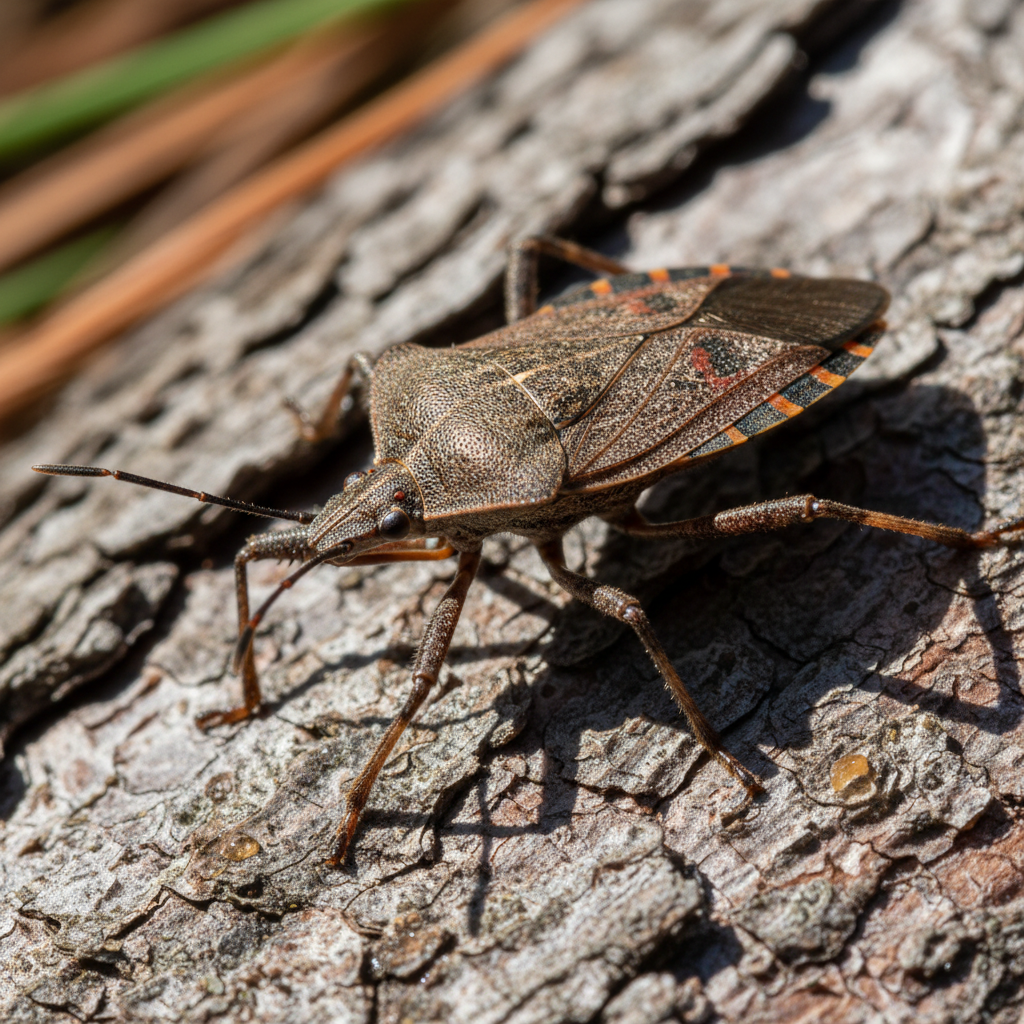
Western conifer seed bug on pine bark in North Idaho, leaf-like hind legs pest identification

Western Conifer Seed Bug

How to Spot Them

  • Adults are about ¾ inch long, dull brown, and have a distinctive leaf-like flattening on their hind legs — the easiest identifying feature.
  • They produce a strong, piney or resinous odor when disturbed or crushed — similar to pine sap.
  • Most commonly found on or near pine, fir, and spruce trees in late summer and fall as they seek warm overwintering sites.
  • They enter homes through gaps around windows, doors, and utility penetrations — and are often found on sunny south- and west-facing walls.

What You Need to Know

Western conifer seed bugs are a nuisance pest — they don't bite, sting, or damage your home's structure. They overwinter inside wall voids and attics, and homeowners notice them most in fall when they're seeking entry and again in spring when they emerge. Their numbers have increased significantly across North Idaho and Eastern Washington as the region's conifer forests have expanded their range. While harmless, large indoor populations are unpleasant.

💡 Simple Prevention Tip: Inspect and seal all gaps around window frames, door sweeps, utility penetrations, and soffits before mid-September. Installing tight-fitting door sweeps and ensuring window screens are intact makes the single biggest difference.
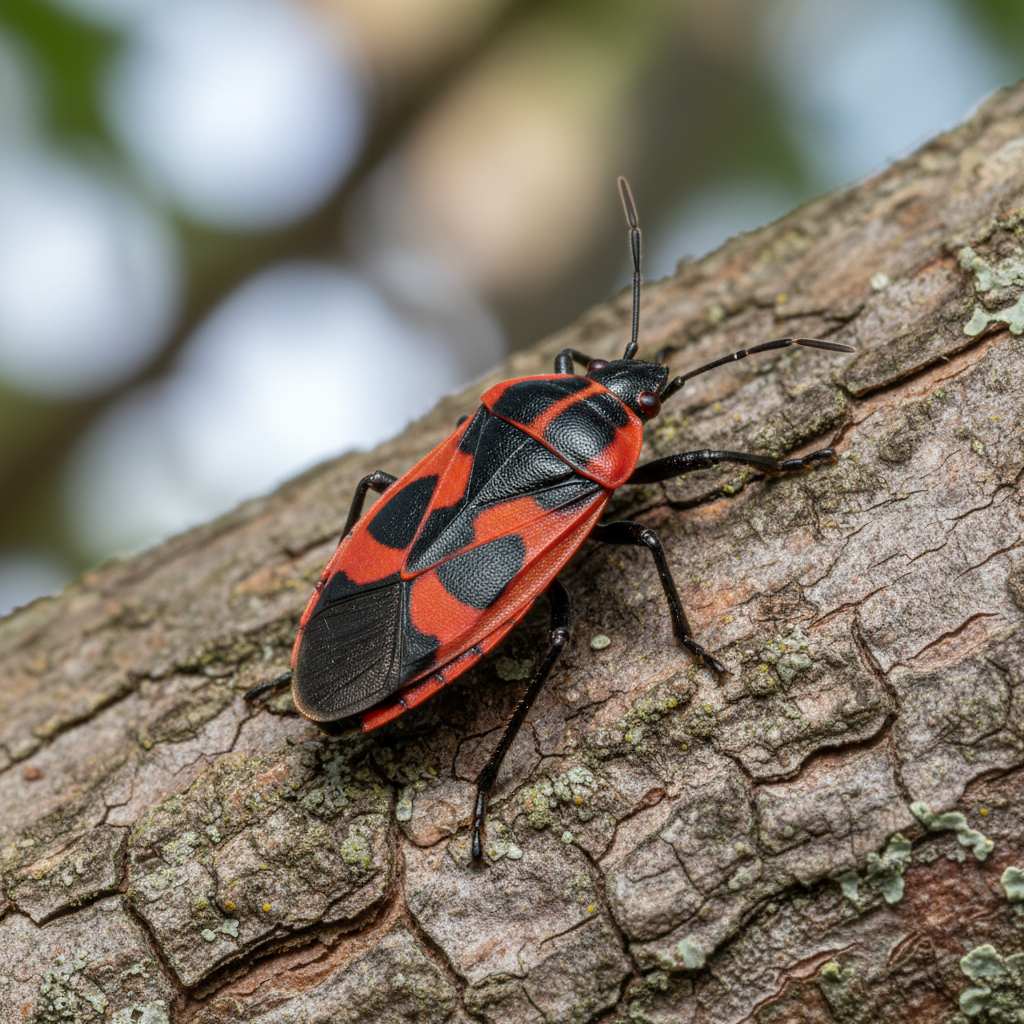
Boxelder bug with red and black markings on tree bark in Spokane WA pest identification

Boxelder Bugs

How to Spot Them

  • Adults are about ½ inch long, black with distinctive bright red-orange borders along the wings and thorax — unmistakable coloring.
  • Nymphs (immature boxelder bugs) are smaller and bright red, often found in clusters on host trees in late spring and summer.
  • They congregate in large numbers on south-facing walls, tree trunks, and rocks on warm autumn days before entering structures.
  • Host trees are the key — if you have a female boxelder tree, silver maple, or ash on your property, expect significant populations nearby.

What You Need to Know

Like conifer seed bugs, boxelder bugs are a nuisance overwintering pest. They don't bite or cause structural damage, but they can stain light-colored surfaces with their droppings and produce an unpleasant odor when crushed. In warm microclimates around Coeur d'Alene, Spokane, and the valley communities, populations can be enormous — with hundreds gathering on a single wall. The most effective long-term solution is removing female boxelder trees from the immediate property, but exclusion work on the structure is the more practical approach.

💡 Simple Prevention Tip: Vacuum up indoor individuals rather than crushing them — crushing releases a staining pigment and odor. Focus exclusion efforts on the fall aggregation period before they find their way inside for winter.
Odorous house ant close-up on kitchen counter North Idaho pest identification

Odorous House Ants

How to Spot Them

  • Very small (1/16–1/8 inch), dark brown to black, with a single node between the thorax and abdomen that is hidden by the abdomen when viewed from above.
  • The defining characteristic: when crushed, they emit a strong, unpleasant rotten-coconut odor — hence the name.
  • Trails of workers are often seen moving in defined lines along countertop edges, baseboards, and under cabinet lips.
  • They are highly opportunistic and nest both outdoors (under rocks, mulch, debris) and inside walls, beneath floors, and in insulation.

What You Need to Know

Odorous house ants are one of the most common and frustrating household ant species in the Inland Northwest. Unlike carpenter ants, they don't damage wood, but they infest kitchens aggressively in search of sweets and moisture. Their colonies are large — often containing multiple queens — which makes DIY treatment with repellent sprays counterproductive, as it causes the colony to 'bud' and split into multiple new colonies throughout your walls. Non-repellent baiting is the only reliable method for full colony elimination.

💡 Simple Prevention Tip: Never use repellent sprays (like RAID) on odorous house ant trails — it makes the problem significantly worse by causing budding. Instead, use slow-acting bait stations and call a professional for persistent or large infestations.
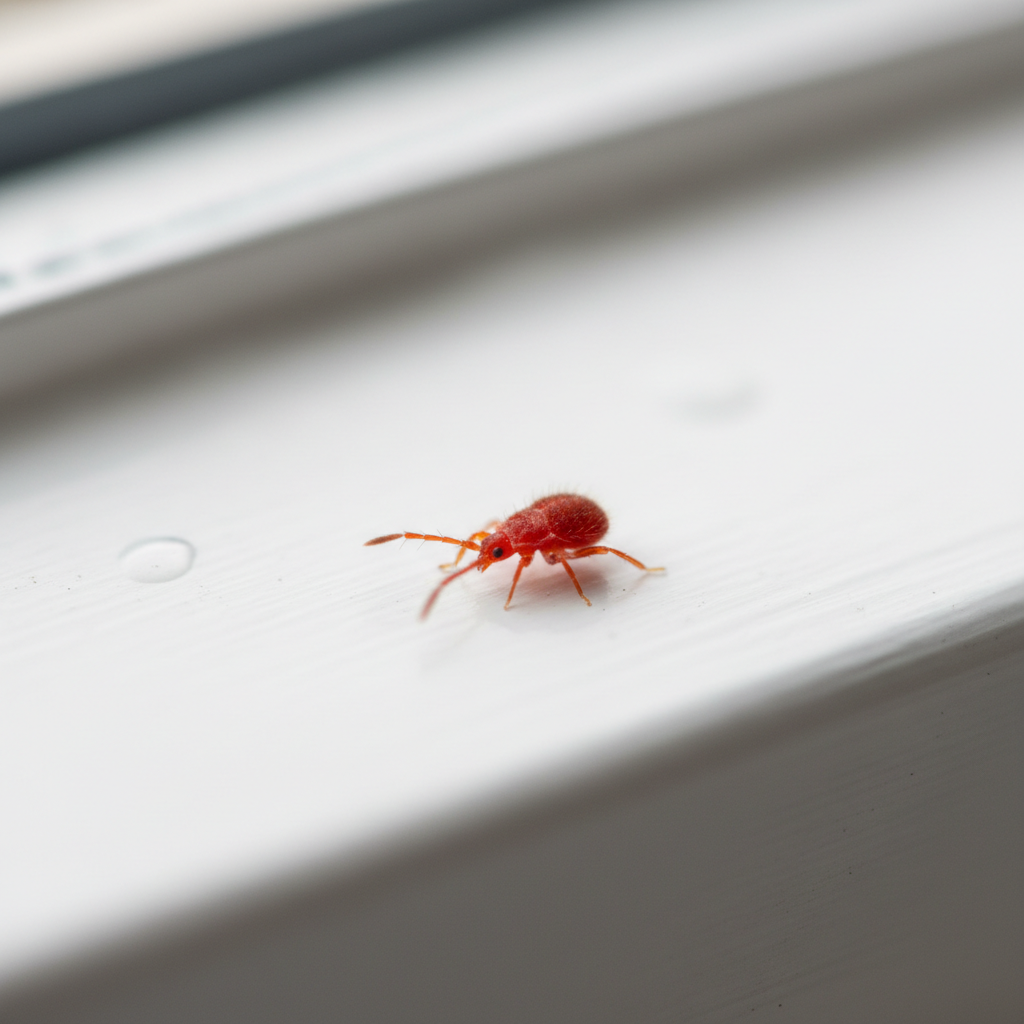
Bright red clover mites on white windowsill North Idaho pest identification

Clover Mites

How to Spot Them

  • Extremely tiny — barely visible to the naked eye — and bright red or reddish-brown, often mistaken for poppy seeds or flecks of red dirt.
  • Front legs are noticeably longer than the other six legs, which distinguishes them from other mite species.
  • They appear in enormous numbers on sunny exterior walls, window sills, and concrete in early spring and again in fall.
  • Unlike most mites, they do not bite humans or animals — they feed exclusively on grasses, clover, and other plants.

What You Need to Know

Clover mites are a nuisance and nothing more — they don't bite, don't infest food, and don't damage structures. However, they invade homes in the thousands and when crushed, leave a distinctive rust-red stain on walls, windowsills, and fabrics that is very difficult to remove. Properties with dense lawns, heavily fertilized turf, or thick ground cover planted directly against the foundation are most susceptible. Creating a dry, plant-free barrier around the perimeter of the home is the most effective structural prevention.

💡 Simple Prevention Tip: Create an 18–24 inch plant-free, dry gravel or mulch band around your foundation. Clover mites avoid dry, bare surfaces and this simple landscaping change dramatically reduces intrusion pressure.
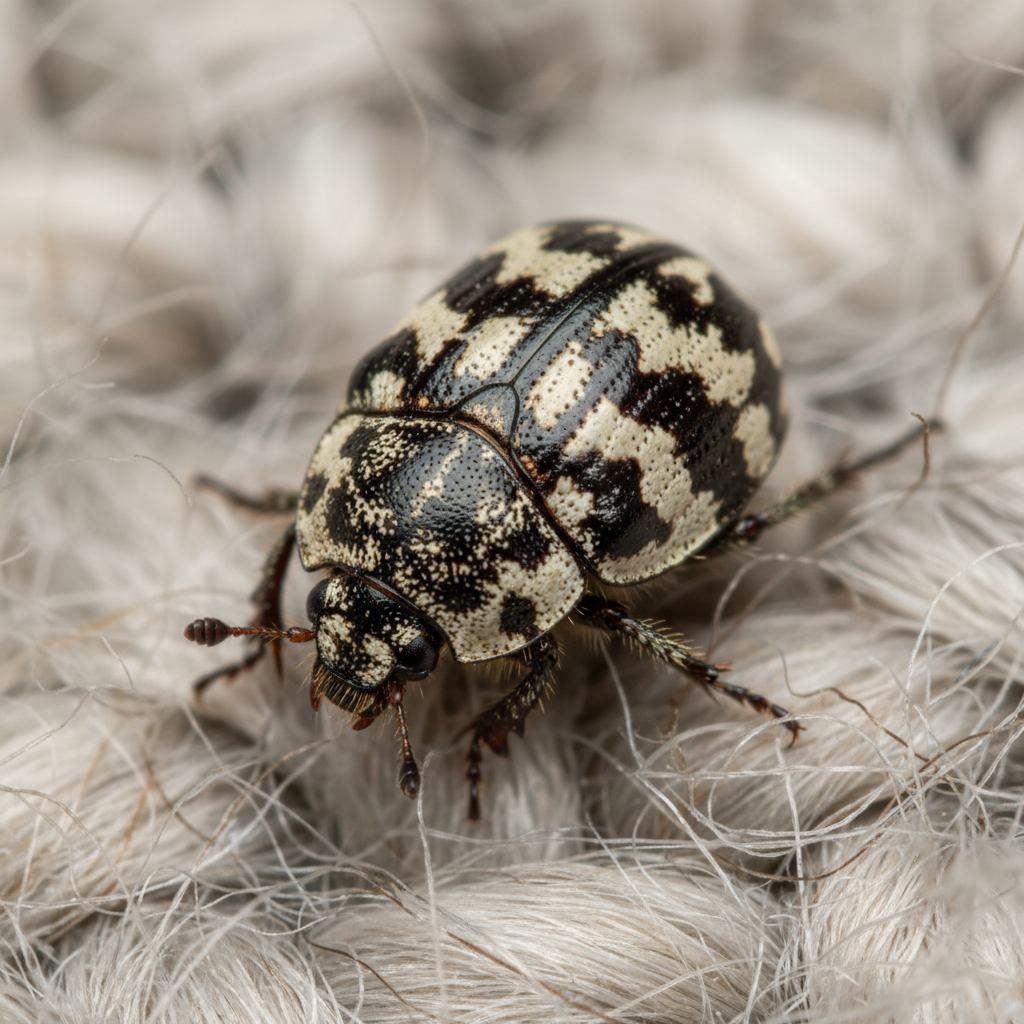
Varied carpet beetle with mottled scales on fabric fiber pest identification North Idaho

Varied Carpet Beetles

How to Spot Them

  • Adults are small (1/16–1/8 inch), round, and covered in a distinctive mottled pattern of white, tan, brown, and black scales — similar to a tiny tortoiseshell.
  • Larvae are the damaging stage: carrot-shaped, covered in dense tufts of brown bristly hairs, and about ¼ inch long when mature.
  • Adults are often spotted near windows and light sources in spring, as they're attracted to light when seeking to exit and lay eggs outdoors on flowers.
  • Infestations are most often discovered as irregular holes or bare patches in wool rugs, blankets, upholstered furniture, and stored animal-fiber clothing.

What You Need to Know

Varied carpet beetles are a genuine fabric-destroying pest. It's the larvae — not the adults — that consume natural fibers like wool, silk, leather, fur, and feathers. They will also feed on dried pet food, stored grains, and even taxidermy. An infestation can go unnoticed for a long time because the damage is gradual and larvae hide in dark, undisturbed areas. Regular inspection of stored woolens, area rugs, and closets is the best early detection strategy. Heating or freezing infested items can kill all life stages.

💡 Simple Prevention Tip: Store woolens, blankets, and natural-fiber clothing in sealed bags or airtight containers. Regularly vacuum under furniture, along baseboards, and inside closets — larvae thrive in undisturbed, dark environments.

Frequently Asked Questions

Answers from the team at Intruest Pest Management in Post Falls, ID.

Are spiders in the Inland Northwest dangerous?

The vast majority of spiders in our region — hobo spiders, giant house spiders, bold jumping spiders — are harmless and actually help control other insects. The one that warrants caution is the Black Widow, identifiable by its glossy black body and red hourglass marking on the underside. Black Widows prefer dark, undisturbed spots like woodpiles, sheds, and crawlspaces. If bitten, seek medical attention promptly.

When does ant season peak in North Idaho and Eastern Washington?

Ant activity surges twice a year. The first peak is in early-to-mid Spring (April–May) as colonies wake from winter and forage aggressively. The second — and often more intense — peak hits during late Summer heat waves (July–August), when drought drives ants indoors in search of moisture. These are the windows where homeowners most commonly see ant trails along countertops, foundations, and entry points.

How can I tell the difference between an ant swarmer and a termite swarmer?

Look at three things: (1) Body shape — ants have a distinctly pinched waist; termites have a straight, tube-like body with no waist. (2) Wings — ants have two pairs of wings of noticeably different sizes; termites have four wings all the same length. (3) Antennae — ant antennae are elbowed; termite antennae are straight and bead-like. If you're unsure, collect a sample and give us a call — we'll identify it for free.

Is professional pest treatment safe for my kids and pets?

Yes — when applied by a licensed professional, modern treatments are formulated to be highly targeted and low-risk once dry. We use EPA-registered products applied exactly per label directions. For most exterior treatments, we ask that people and pets stay off treated surfaces until dry (typically 30–60 minutes). On the interior we use products that are safe to use while you're inside.

Not Sure What You're Dealing With? Let Us Take a Look.

Intruest Pest Management provides free inspections for homeowners across Post Falls, Coeur d'Alene, Hayden, Rathdrum, and Spokane. We'll identify the pest, explain your options, and give you an honest quote — no pressure.

Call (208) 416-7180

Mon–Sat · 8:00 AM – 5:00 PM · Free Inspections Available